
 Freephone 24/7 Call: 0800 068 4015








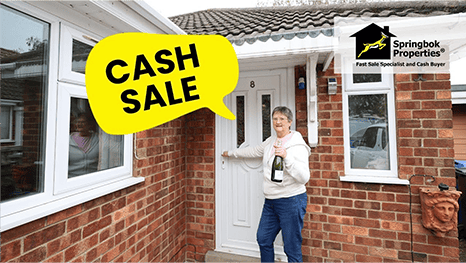

What nobody tells you about selling an inherited house
What this video is about
Inheriting a house is work, at exactly the moment you have the least capacity for it. Alongside grief, you may be acting as executor, dealing with solicitors and the Land Registry, sorting decades of belongings and working out what probate even means.
This calm, step-by-step guide explains probate in plain English, your three real options for the property, and the two realistic ways to sell: the open market or a direct sale. It also gives three questions to ask any property buying company before you sign.
No pressure and no countdown timer. Just clear information, so that when you are ready to decide, you are not guessing.
Key takeaways
You usually need probate before you can sell. Or letters of administration if there was no will. Simple estates take a few months; complex ones can take a year or more.
You can prepare while you wait. Get the property valued, start clearing it and explore your options. You generally just can't complete until probate is granted.
You have three real options. Keep it, rent it out (which makes you a landlord with legal duties) or sell it. Agree early how shared ownership will work.
Weigh the open market against a direct sale. The open market can achieve more, but an empty house costs insurance, council tax and upkeep every month it doesn't sell.
Ask any buyer three questions. Do they handle probate sales and belong to The Property Ombudsman? Do they have independent reviews? Are they buying with their own funds?
What this video covers
- 1If you've inherited a house
- 2Why this is harder than people expect
- 3Probate, in plain English
- 4Your three real options
- 5If you choose to sell: the two routes
- 6Three questions to ask any buyer
- 7Where Springbok fits in
- 8Final thoughts
Full transcript
Cold open
If you're watching this, there's a good chance someone you loved has recently died, and somewhere in the middle of everything else, you've been handed the keys to their house.
I want to say something before anything else: I'm sorry for your loss. Whatever this loss has been for you — sudden, expected, complicated, close, distant — it's real, and it deserves to be treated as real before it's treated as a property problem.
But at some point, usually sooner than feels fair, the house does need dealing with. And that's what this video is for.
Over the next few minutes, I'm going to walk you through what actually happens when you inherit a property in the UK — the legal steps, the real options in front of you, and the things almost nobody explains clearly the first time round. No pressure, no countdown timer, no "act now or lose out." Just what you need to know, so that when you are ready to decide, you're deciding with clear information instead of guesswork.
Why This Is Harder Than People Expect
Here's something people rarely say out loud: inheriting a house is work, at exactly the moment you have the least capacity for work.
You're not just grieving. You're often becoming an executor or administrator, dealing with a solicitor, contacting the Land Registry, sorting through decades of someone's belongings, managing utility companies, redirecting post, and figuring out what "probate" even means — often for the first time in your life.
And if you're doing this alongside siblings or other family members, there's another layer entirely. Grief affects people differently. One person might want to sell immediately because the house is too painful to walk into. Another might want to hold onto it for a year because they're not ready to let go. Neither reaction is wrong — but it means decisions about the house can become decisions about the family, and that's a lot to carry at once.
None of this makes you badly organised or bad at this. It makes you human, going through something genuinely difficult, on a timeline you didn't choose.
So let's take it one piece at a time.
The Legal Reality: Probate, In Plain English
Before a property can usually be sold, the estate typically needs to go through probate — or, if there was no will, a very similar process called letters of administration.
In simple terms: probate is the legal permission that confirms who has the authority to deal with the deceased's estate, including the house. Until that's granted, in most cases, the property legally can't be sold or transferred.
A few things worth knowing:
- It takes longer than people expect. Straightforward estates can take a few months. More complex ones — multiple properties, disputes, assets abroad, missing paperwork — can take considerably longer, sometimes the best part of a year or more.
- You can prepare while you wait. You can get the property valued, start clearing it if you're ready, and speak to buyers about your options — you generally just can't legally complete a sale until probate is granted.
- You don't have to do it alone. A probate solicitor can guide the whole process. Yes, it costs money, but for most families it's worth the peace of mind, especially if the estate is anything but simple.
I want to be honest with you here: I'm not a solicitor, and this video isn't legal advice. Probate rules and timelines vary depending on your circumstances, whether there's a will, and which part of the UK you're in. If anything here raises a question specific to your situation, that's exactly the kind of thing worth a proper conversation with a probate solicitor.
Your Three Real Options
Once probate is granted and the practical picture is clear, most people are choosing between three paths.
Option one: keep it. Maybe a family member wants to live in it, or you're not ready to part with it emotionally. That's completely valid. Just go in with open eyes about ongoing costs, and if multiple people have inherited a share, be clear early on about how that arrangement works — informal agreements between grieving family members are exactly where misunderstandings tend to grow later.
Option two: rent it out. This can generate income and buy you time. But it also makes you a landlord — with all the legal responsibilities that come with that: safety certificates, deposit protection, and ongoing tenant management. If the property needs work before it's rentable, add that cost and time too. It's a real option, but it's not a passive one.
Option three: sell it. For a lot of families, this is where things land — not because it's the "easiest" emotionally, but because it's the option that actually closes the chapter. No more insurance renewals for an empty house, no more split decisions between siblings about who mows the lawn, no more council tax letters landing on a doormat nobody checks anymore.
There's no "correct" choice here. There's only the choice that fits your family, your finances, and your own readiness. But if selling is the direction you're leaning, here's what that actually looks like in practice.
If You Choose to Sell: The Two Realistic Routes
Broadly, once you decide to sell, you have two routes.
The open market, through an estate agent. This can get you closer to full market value, but it comes with viewings, negotiations, buyers pulling out partway through a chain, and — very relevant to a probate sale — an inherited property often needs clearing, cleaning, and sometimes repairs before it's presentable enough to list. If nobody in the family lives locally, or nobody has the time or the stomach to manage that process right now, this route can drag on for months — and every one of those months is another month of insurance, council tax, and upkeep on a house nobody's living in.
Or, a direct sale to a genuine cash or fixed-price property buyer. This route means selling the property broadly as it stands — no clearing it out for viewings, no repairs to arrange, no chain to worry about collapsing at the last minute, because there isn't one. It's typically faster, and it removes a lot of the logistical weight from a family that's already stretched thin.
I'll be straightforward with you: this second route isn't automatically "better." You'll typically receive a different price than chasing full market value on the open market, because you're trading some of that value for speed, certainty, and simplicity. For some families, that trade is exactly right. For others, getting the highest possible price matters more than the timeline, and the estate agent route makes more sense.
The point isn't to tell you which is right. It's to make sure you know both exist, honestly, before you choose.
What to Actually Watch Out For
If you do decide to sell to a property buying company rather than go through an estate agent, there are three questions worth asking before you sign anything. Not because most companies are dishonest — most aren't — but because the honest ones will answer these without hesitation, and that's how you tell the difference.
First: do they actually deal with probate properties, and are they regulated? Probate sales aren't the same as a normal house sale. There are extra legal steps, extra sensitivity around timing, and often extra family members involved in the decision. Ask how many probate sales they handle, not just whether they "can" do one. Then check their regulation — in the UK, that means looking for membership of The Property Ombudsman (TPO). That membership means there's an independent body you can go to if something goes wrong, rather than just taking the company's word for how they'll behave.
Second: do they have credible, independent reviews and real social proof? Anyone can put testimonials on their own website. What you're looking for is evidence you can't fake — a genuine, checkable footprint on independent platforms like Trustpilot, Google Reviews, or allAgents, ideally with thousands of reviews rather than a handful, and a track record that goes back years rather than months. Video reviews are an even stronger signal, because it's much harder to fabricate someone speaking on camera than a line of text. If a company's entire reputation lives only on their own site, that's worth noticing.
Third: will they actually buy the property directly, using their own funds? This is the one that catches people out. Some "cash buyer" companies aren't buying anything themselves — they're passing your details to a third-party investor, who can still pull out, renegotiate the price down at the last minute, or need a mortgage to complete, which brings back exactly the uncertainty you were trying to avoid. Ask directly: "Are you buying this with your own money, or are you introducing me to someone else who is?" A company buying with its own funds can move faster and is far less likely to fall through.
None of this needs to feel like a test, and you shouldn't feel awkward asking. A reputable company will expect these questions and welcome them — because they already know the answers reflect well on how they work.
Where We Fit In, If You Want Support
This is the part where I'll tell you plainly what we do, so you can decide for yourself if it's relevant to you.
We're Springbok Properties. We've been helping people sell homes across England, Wales, and Scotland since 2012, and a significant part of that work has been supporting families through exactly this situation — selling a property they've inherited, often while still grieving the person who left it to them.
We offer a few different routes depending on what matters most to you: a straightforward cash sale if speed and certainty are the priority, or our Fixed Price route if getting closer to full market value matters more and you can allow a little more time. Either way, we cover the legal costs, there are no estate agent fees, and you're not asked to clear the house out to make it presentable — we work with the property as it is. With the cash route, there are no viewings at all. With Fixed Price, there may be a small number of viewings, but only ever with buyers we've already vetted.
We're regulated by The Property Ombudsman and we're members of the National Association of Property Buyers, which means there's proper, independent oversight on how we operate — not just our word for it.
Over 19,000 homeowners across the UK have sold with us, and we currently have more than 11,700 independent reviews across Trustpilot, Google, and allAgents — the vast majority from people who'd recommend us to someone else in their position. We've also been featured in national outlets like the BBC, ITV, Channel 4, and The Guardian when they've covered the UK property market. None of that is to impress you — it's so that if you do look us up afterwards, what you find matches what I've told you here.
Close
However this house came to you, and whatever you decide to do with it, I hope this video gave you something useful for a moment that's genuinely difficult. Take your time with the decision. Talk to a solicitor about the legal side. Talk to your family about what feels right, not just what's fastest.
And if, when you're ready, you'd like a free, no-obligation valuation or just want to talk through your options with someone who's guided other families through exactly this — the details are in the description below. No pressure, no pushy sales call. Just honest help, whenever you're ready for it.
Take care of yourself in the meantime.
This transcript is based on the video script, so the wording may differ slightly from the final video.
Common questions
Can you sell an inherited house before probate is granted?
You can prepare, including getting a valuation, clearing the property and speaking to buyers, but in most cases you can't legally complete the sale until probate (or letters of administration) has been granted.
How long does probate take in the UK?
Straightforward estates can take a few months. Complex estates, such as those with several properties, disputes, overseas assets or missing paperwork, can take the best part of a year or longer.
What are my options with an inherited house?
You can keep it, rent it out or sell it. Renting makes you a landlord with legal responsibilities. Selling can be done through an estate agent or directly to a property buying company.
What should I check before selling an inherited house to a cash buyer?
Check they regularly handle probate sales and are members of The Property Ombudsman, that they have a large number of independent reviews on sites such as Trustpilot, Google and allAgents, and that they are buying with their own funds rather than passing you to an investor.


