
 Freephone 24/7 Call: 0800 068 4015










I'm a property expert that still remembers the days when having broadband was a selling point! My articles cover issues that homesellers face in the UK and answer the questions we're all asking. I've bought and sold properties and helped others do the same, so my writing comes from years of experience.
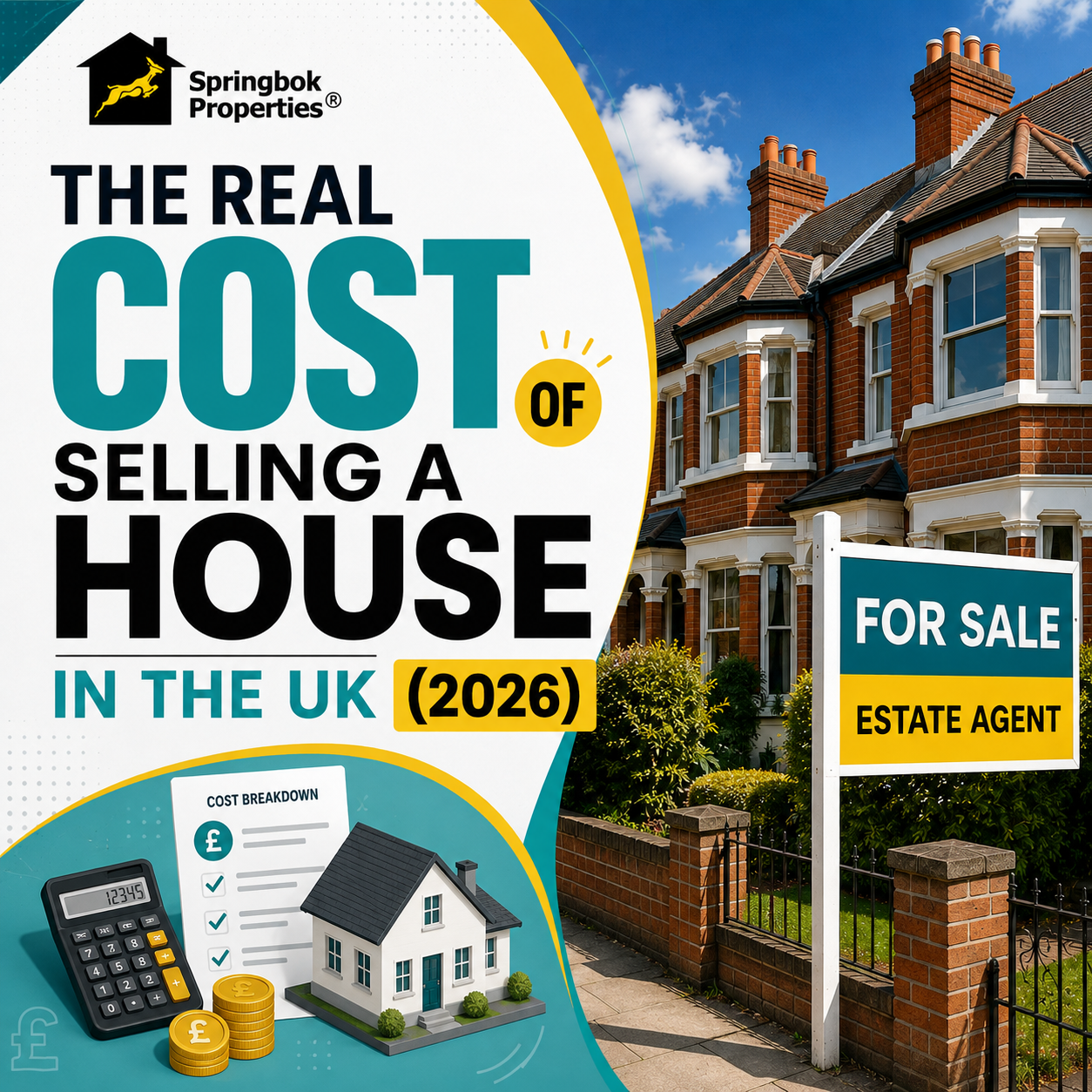
Read Full Bio >The cost of selling a house in the UK is typically £5,100 to £7,000 in 2026 — about 2% to 2.6% of the sale price — covering estate agent commission, VAT, conveyancing, an EPC and removals.
Key takeaways
- The average UK home costs about £6,000 to sell. On the £272,188 average recorded by HM Land Registry in June 2026, a mid-range build comes to roughly £5,955: £3,865 commission, £1,150 conveyancing, £90 EPC and £850 removals.
- Estate agent commission is the single biggest line. The average sole-agency high street fee is 1.42% including VAT (HomeOwners Alliance, 2026) — £3,865 on an average home. Quoted rates that exclude VAT are 20% higher than they look.
- Sellers pay no stamp duty. Stamp Duty Land Tax is a buyer’s tax. Capital gains tax is also £0 on your main home thanks to Private Residence Relief.
- Time is the cost nobody quotes. An agent sale runs about 22 weeks to completion, and mortgage, council tax, insurance and utilities keep running — commonly £1,000 to £1,700 a month.
- A direct cash sale strips the fee side to zero. No commission, no EPC for a marketed listing, and Springbok Properties covers the legal fees — in exchange for an offer below full market value.
How much does it cost to sell a house in the UK in 2026?
Budget for 2% to 3% of your sale price. Four costs are effectively unavoidable on an open-market sale: estate agent commission, conveyancing, an Energy Performance Certificate and removals. Everything else — leasehold packs, indemnity insurance, mortgage exit charges — depends on your property and your mortgage. The table below prices each line on the average UK home, which HM Land Registry put at £272,188 in June 2026.
| Cost | Typical range | On an average home | Avoidable? |
|---|---|---|---|
| Estate agent commission (inc VAT) | 0.9%–3.5%, average 1.42% | £3,865 | Yes — sell direct or privately |
| Conveyancing (legal fees + disbursements) | £610–£950 fees; £800–£1,500 all in | £1,150 | No — but a buyer can cover it |
| Energy Performance Certificate | £60–£120 | £90 | Only if yours is still valid |
| Removals (3-bed, ~50 miles) | £400–£1,500 | £850 | Partly — DIY or mid-week move |
| Leasehold management pack | £300–£800 | Leasehold only | No, if leasehold |
| Indemnity insurance | £20–£300 | If requested | Sometimes |
| Mortgage early repayment charge | 1%–5% of the balance | Depends on your deal | Yes — time it to the fixed-rate end |
| Realistic core total | 2%–2.6% of sale price | £5,100–£7,000 | — |
Two things skew the total. A leasehold flat with an early repayment charge can push past £9,000. A chain-free freehold sale with a valid EPC and a DIY move can land under £4,500. If you want the figure for your own property, our selling costs calculator works it out line by line.
What are the estate agent fees for selling a house?
High street agents charge a percentage of the sale price; online agents charge a fixed fee. The average sole-agency high street rate in 2026 is 1.42% including VAT according to the HomeOwners Alliance — £3,865 on an average home. The full market range runs from 0.9% to 3.5%.
The VAT trap. Estate agency is a VAT-able service at 20%. A rate quoted as “1.5%” is 1.8% once VAT is added — £4,899 rather than £4,083 on a £272,188 home, a difference of £816. Always ask whether the quoted rate is inclusive.
Online and hybrid agents charge £300 to £1,500 as a flat fee, sometimes payable upfront whether or not the house sells. That is cheaper on paper, but you usually handle your own viewings and negotiation. We break the whole fee structure down in our guides to estate agent selling fees and the hidden costs of selling with an estate agent.
How much are solicitor and conveyancing fees when selling?
Conveyancing for a sale costs £610 to £950 in legal fees, or £800 to £1,500 once disbursements are included. Disbursements are the third-party charges your solicitor pays on your behalf — HM Land Registry title documents, bank transfer fees, and, for a leasehold flat, the management pack from your freeholder at £300 to £800.
Three questions cut most of the surprises: is the quote fixed-fee, does it include VAT, and are leasehold or mortgage-redemption charges extra? Our guide to conveyancing fees and the solicitor costs to avoid goes through the quote line by line. Solicitors are regulated by the Solicitors Regulation Authority, and licensed conveyancers by the CLC — check the firm is on one of those registers before you instruct.
What other costs do you pay when selling a house?
The smaller lines add up to £500–£2,000 between them.
- Energy Performance Certificate — £60 to £120. Legally required before marketing, valid for 10 years. Check whether yours is still live on the free GOV.UK energy certificate register before you pay for another.
- Removals — £400 to £1,500. A three-bed move of around 50 miles typically costs £800 to £1,200. Mid-week dates and a mid-month completion are cheaper than a Friday at month-end.
- Indemnity insurance — £20 to £300. A one-off policy covering a paperwork gap, such as missing planning consent or a boiler certificate. Sellers usually pay it to keep the sale moving.
- Mortgage early repayment charge — 1% to 5% of the outstanding balance. Often the largest single cost after commission if you are still inside a fixed term. Ask your lender for a redemption statement before you list.
- Mortgage exit or admin fee — £50 to £300. Charged on redemption and easy to miss on a redemption statement.
Do you pay stamp duty or capital gains tax when you sell a house?
Sellers pay no stamp duty. Stamp Duty Land Tax is charged on a purchase and paid by the buyer. If you are buying as well as selling, you pay it on the home you buy, not the one you leave.
Capital gains tax is £0 on your main home. Private Residence Relief covers the property you actually live in. On a second home or buy-to-let you pay 18% or 24% on the gain above the £3,000 annual exempt amount for 2026/27, depending on which income tax band the gain falls into — and UK residential property disposals must be reported and paid within 60 days of completion via HMRC. Landlords should read our guide to what cash buyers actually offer alongside the tax position before deciding.
Springbok Properties is not a tax adviser — confirm your own position with an accountant or with HMRC directly.
What does it cost to sell a house in Scotland?
Scotland runs a different system. The seller must provide a Home Report before the property goes on the market: a single survey, an energy report and a property questionnaire in one pack. It typically costs £350 to £600 and replaces the standalone EPC. Everything else — agent commission, legal fees, removals — works broadly as it does in England and Wales, so the Scottish total tends to land £250 to £500 higher.
What is the cost most sellers forget?
Time. An estate agent sale takes around 22 weeks from listing to completion, and your mortgage, council tax, buildings insurance and utilities keep running the whole way through — commonly £1,000 to £1,700 a month. Five months of that is £5,000 to £8,500, which can quietly exceed every fee on the invoice.
Then there is the risk of paying twice. TwentyEA put the national fall-through rate at 23.7% in the first quarter of 2026 — nearly one sale in four collapses before completion, and abortive legal fees are rarely refunded. A survey-driven renegotiation of £2,000 to £10,000 late in the process is another cost that never appears in a “cost of selling” table.
How do the three selling routes compare on cost?
| Route | Agent fee | Legal fees | Typical timescale | Total selling cost |
|---|---|---|---|---|
| High street estate agent | £3,865 (1.42% inc VAT) | £800–£1,500 | ~22 weeks | £5,100–£7,000 |
| Online / hybrid agent | £300–£1,500 fixed | £800–£1,500 | ~22 weeks | £1,600–£4,500 |
| Genuine cash buying company | £0 | £0 (buyer covers) | 7–28 days | £0 in fees; offer below market value |
The honest comparison is not fees against fees — it is fees plus five months of carrying costs against a lower headline price. Our side-by-side breakdown of a cash buyer versus an estate agent runs both sets of numbers to a net figure, and house buying company fees explains what a genuine buyer should and should not charge.
How can you cut the cost of selling a house?
- Get three agent quotes and confirm each includes VAT. The gap between 0.9% and 1.8% is £2,450 on an average home.
- Refuse sole selling rights. Sole agency is normal; sole selling rights means you owe commission even if you find the buyer yourself.
- Cap the tie-in at 8–12 weeks. A 20-week tie-in locks you into an underperforming agent for five months of carrying costs.
- Check your EPC before you buy one. They last 10 years, and the register is free.
- Time your sale to the end of your fixed rate to avoid an early repayment charge worth thousands.
- Price the speed, not just the fee. A route that completes in three weeks removes four months of running costs — see our six ways to sell your house fast and the option to sell without an estate agent entirely.
How Springbok Properties prices a sale
Springbok Properties Ltd (company no. 09045757) buys directly from homeowners across the UK. There is no commission, no EPC needed for a marketed listing, and we cover the legal fees, so the fee side of the table above comes to £0. In exchange, the offer sits below full market value — we set out exactly how far below in our guide to how much below market value cash buyers offer. We are regulated by The Property Ombudsman and are members of the National Association of Property Buyers. If speed is what you are buying, start with sell house fast.
Frequently asked questions about the cost of selling a house
How much does it cost to sell a house in the UK?
Selling an average UK home costs roughly £5,100 to £7,000 in 2026 — about 2% to 2.6% of the sale price. On the average £272,188 property that is around £3,865 in estate agent commission including VAT, £800 to £1,500 in conveyancing, £60 to £120 for an EPC and £400 to £1,500 for removals.
Do you pay stamp duty when you sell a house?
No. Stamp Duty Land Tax is paid by the buyer, not the seller. You only pay stamp duty on a sale if you are also buying another property in the same move — and then it is charged on the purchase, not on the home you are selling.
Do I pay capital gains tax when I sell my house?
Not on your main home. Private Residence Relief exempts the property you live in. On a second home or buy-to-let you pay 18% or 24% on the gain above the £3,000 annual exempt amount for 2026/27, and you must report and pay within 60 days of completion.
How much are solicitor fees for selling a house?
Conveyancing for a sale is typically £610 to £950 in legal fees, or £800 to £1,500 once disbursements such as Land Registry documents and bank transfer charges are added. Leasehold flats cost more because of the management pack, which runs £300 to £800.
Can you sell a house with no fees at all?
Yes, if you sell direct to a genuine cash buying company. There is no estate agent commission, no EPC to commission for a marketed listing and, with Springbok Properties, the legal fees are covered. The trade-off is that the offer sits below full market value.
How long does it take to sell a house in the UK?
An estate agent sale takes around 22 weeks from listing to completion. That matters financially, because your mortgage, council tax, insurance and utilities keep running throughout — commonly £1,000 to £1,700 a month on top of the selling fees themselves.
Written by Dan Green, Property Expert at Springbok Properties. Last updated 27 August 2026. Figures are illustrative and based on HM Land Registry, HomeOwners Alliance and HMRC data current at that date; your own costs will vary by property, location and mortgage.
